
 EN
EN
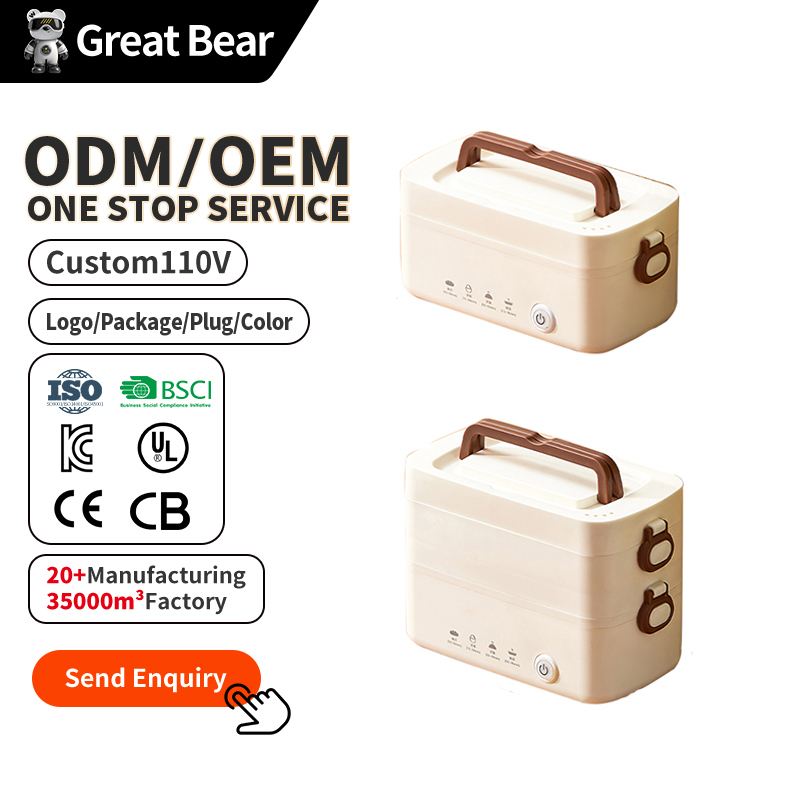
Daily commuting and mobile work schedules create substantial barriers to maintaining healthy, consistent dietary habits. Relying on shared office microwaves exposes individuals to hygiene risks, lingering odors, and significant waiting times during peak lunch periods. Traditional insulated lunch containers fail to maintain safe food temperatures over multiple hours, allowing meals to enter the bacterial danger zone between five and sixty degrees Celsius. Investing in a properly designed electric lunch box heating food portable unit resolves these challenges by generating on-demand heat while preserving internal food moisture.
Weight Considerations in an Electric Lunch Box Heating Food Portable Unit
Portability requires a delicate balance between heating performance and physical weight. Heavier appliances cause fatigue during walking commutes or public transit transit, discouraging daily use. High-efficiency designs utilize compact polymer structural casings paired with lightweight metallic heating plates, keeping total empty weight below one kilogram. Integrating an electric lunch box heating food portable appliance into an everyday shoulder bag demands ergonomic contours and balanced center-of-gravity engineering to prevent excessive physical strain.
Active Thermal Engineering Versus Passive Insulation
Passive insulated bags merely retard heat transfer, resulting in tepid, unpalatable meals after four hours. In contrast, active thermal appliances use controlled low-wattage electrical resistance to produce direct convective or steam heat. This active process raises chilled meals to safe serving temperatures without destroying food cell structures. Food retains its natural flavor, moisture, and micronutrient profile without the rubbery texture typically produced by high-frequency microwave radiation.
Logistics Dispatch Case Study in Fleet Operations
Operational Background and Highway Health Risks
A regional intermodal transport company based in Ohio managed a dispatch fleet of forty-eight delivery drivers operating long-haul routes. Drivers relied primarily on fast-food service stops or gas-station convenience stores, resulting in poor nutritional intake, midday fatigue, and elevated rates of dietary complaints. Management sought an onboard meal preparation solution to help drivers reheat home-cooked food safely inside truck cabins.
Sourcing Deployment and Field Implementation
Fleet supervisors introduced customized Greatbear-Home portable food warmers equipped with dual-voltage vehicle cigarette lighter adapters and standard wall plugs. The firm selected an electric lunch box heating food portable configuration featuring removable stainless steel compartments and leak-proof latches. Drivers prepared meals at home, stowed the units in vehicle cabs, and activated heating thirty minutes prior to scheduled rest breaks.
| Fleet Evaluation Metric | Previous Fast-Food Routine | Onboard Portable Warming |
|---|---|---|
| Daily Meal Expenditure | Twenty-two dollars per driver | Six dollars per driver |
| Dietary Complaint Incidents | 19 cases per quarter | 1 case per quarter |
| Driver Rest Break Efficiency | 45 minutes including stops | 20 minutes direct rest |
Measurable Improvements in Fleet Performance
Implementing the electric lunch box heating food portable system produced measurable improvements across company operations. Drivers saved an estimated sixteen dollars daily while reporting higher energy levels throughout afternoon shifts. Health-related absences linked to poor food choices dropped by seventy percent over two consecutive operating quarters.
Core Selection Criteria and Technical Architecture
PTC Ceramic Heating and Power Efficiency
Positive Temperature Coefficient ceramic heating elements represent the premier thermal mechanism for personal food warmers. Unlike traditional wire coils that risk thermal runaway, PTC ceramics exhibit self-limiting electrical resistance that caps operating temperatures around seventy degrees Celsius. Choosing an electric lunch box heating food portable device with PTC components ensures gentle, uniform thermal diffusion that prevents scorched bottoms while drawing minimal electrical wattage.
Material Purity and Food Contact Compliance
Internal food containers must withstand repeated thermal cycling without degrading or imparting chemical flavors. Professional buyers should specify deep-drawn AISI 304 food-grade stainless steel for interior meal trays. The outer chassis should feature heat-resistant polypropylene devoid of bisphenol compounds. Deploying an electric lunch box heating food portable vessel with certified food-contact materials prevents toxic plasticizer migration during extended heating cycles.
Negative Pressure Hermetic Sealing Systems
Preventing soup or sauce leaks during transit is essential for mobile users carrying electronics. Premium units feature high-elasticity silicone gaskets and multi-point perimeter latches that form an airtight seal. When hot air inside the chamber cools, it forms a natural negative pressure lock that secures the lid against accidental openings. Built-in pressure-relief silicone exhaust valves allow steam venting before opening, preventing thermal splash hazards.
Safety Certifications and Strategic Maintenance Protocols
Compliance with International Electrical Standards
Personal heating appliances must satisfy rigorous international safety benchmarks before entering global consumer markets. Equipment should demonstrate compliance with IEC 60335-2-15 safety standards for electrical liquid and food heating appliances, as well as UL 1026 requirements. Selecting an electric lunch box heating food portable product verified under RoHS directives ensures the internal circuitry contains no hazardous heavy metals like lead or cadmium.
Preventive Care and Long-Term Descaling Protocols
Maintaining hygienic performance requires consistent cleaning protocols. Detachable stainless steel trays should be washed after each use with mild dish detergent or placed in an automated dishwasher. Exterior heating bases must only be wiped with a damp microfiber cloth to protect electrical contacts. If mineral scale accumulates on heating plates, applying a dilute citric acid soak removes mineral deposits without degrading metal surfaces. Adopting an electric lunch box heating food portable appliance equipped with quality components and following strict maintenance routines ensures reliable, wholesome meal warming for years of daily service.
Frequently Questions and Expert Answers
Frequently Questions
Question
What features make an electric lunch box heating food portable unit easy to carry?
Answer
A lightweight profile under one kilogram, ergonomic fold-flat carry handles, and compact exterior dimensions ensure effortless transport inside executive briefcases or backpacks. Advanced designs use high-impact polypropylene outer shells paired with thin-wall stainless steel inner trays to maximize internal food capacity while minimizing dead weight during long daily walking commutes.
Question
How many minutes does a typical portable food warmer take to heat refrigerated food?
Answer
Most sixty-watt appliances require twenty-five to thirty-five minutes to warm refrigerated leftovers to an ideal serving temperature of seventy degrees Celsius. Adding a tablespoon of water beneath the stainless steel tray creates circulating steam that accelerates heat transfer, ensuring meats, vegetables, and starches heat evenly without drying out.
Question
Can portable food warmers operate safely inside moving passenger vehicles?
Answer
Yes, models equipped with dedicated twelve-volt or twenty-four-volt DC power cords plug directly into vehicular auxiliary power sockets. The self-regulating PTC heating element draws modest wattage that will not strain standard vehicular electrical systems or trigger fuse disruptions, providing hot meals for commercial drivers on extended routes.
Question
Does heating food in a stainless steel tray release metallic tastes into meals?
Answer
High-grade AISI 304 food-grade austenitic stainless steel provides exceptional chemical stability and corrosion resistance under elevated temperatures. It remains completely inert, preserving natural culinary flavors without imparting metallic tastes, synthetic odors, or toxic residues into delicate food preparations during prolonged heating cycles.
Question
What safety mechanism prevents the heating base from overheating if left unattended?
Answer
Quality appliances integrate automatic thermal cut-off switches and PTC ceramic technology. If internal temperatures exceed safe operating limits, the thermal switch severs electrical flow immediately. The self-limiting nature of PTC ceramics naturally caps heat generation, providing dual-layer protection against dry-burning hazards or melted polymer housings.
For inquiries, please contact:
Leah Lin
Wechat/Whatsapp:+86 18098121508
Email:[email protected]
Theta
+86 18029859881
[email protected]
PS:Fill in the form and leave your phone number, or contact our salesperson directly