
 EN
EN
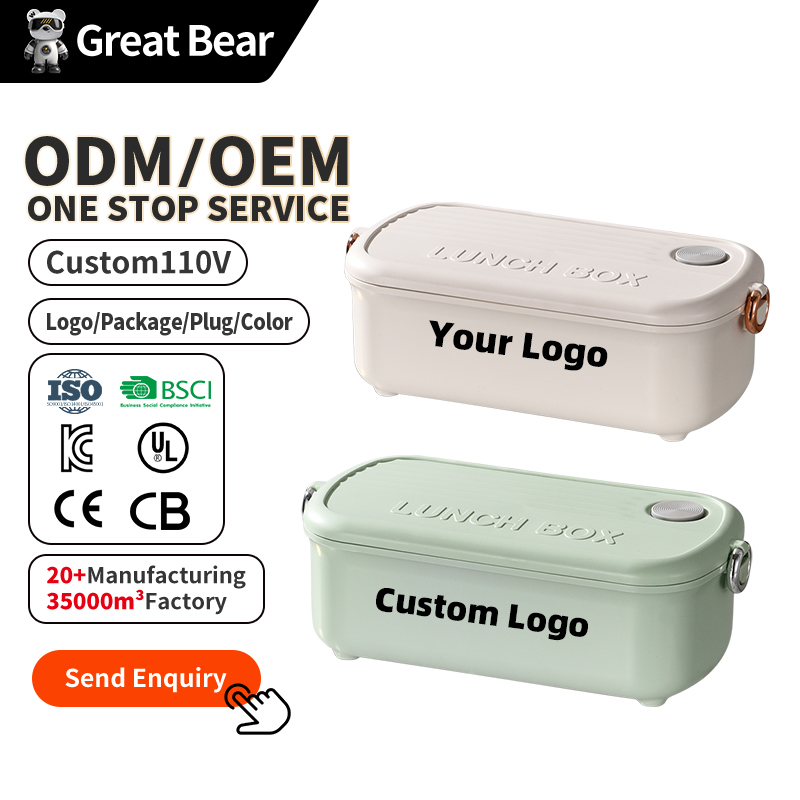
Navigating daily workplace nutrition presents significant logistical hurdles for busy corporate personnel. Long queues at communal breakroom microwaves waste limited lunch breaks, while poorly maintained heating appliances introduce contamination concerns. Shared microwave interiors often harbor splattered oils, microbial biofilms, and pungent food odors from previous users. Heating meals with microwave radiation also dehydrates food rapidly, degrading taste and altering cellular textures. Transitioning to a dependable electric lunch box food warmer addresses both nutritional and schedule demands, allowing professionals to enjoy wholesome meals directly at their desks.
Desktop Convenience of an Electric Lunch Box Food Warmer
Operating a compact electric lunch box food warmer directly at a workstation restores control over daily schedules. Employees simply connect the device thirty minutes before their lunch break, eliminating time lost standing in shared kitchens. Silent heating elements operate discreetly in open-plan office spaces without disturbing coworkers or emitting steam clouds. This private dining approach supports consistent eating routines, enabling staff to maintain balanced energy levels throughout demanding workdays.
Microwave Hygiene Hazards and Nutrient Preservation
Public health assessments frequently reveal substantial bacterial contamination on communal kitchen surfaces, including microwave keypads and handle assemblies. Traditional microwave reheating frequently produces uneven thermal profiles, leaving cool pockets where foodborne bacteria linger. In contrast, steady conductive heating warms meals uniformly to safe internal temperatures. Gentle thermal distribution preserves heat-sensitive vitamins, dietary fiber, and natural flavors without requiring excessive cooking oils or artificial additives.
Corporate Case Study in Corporate Workforce Wellness
Operational Background and Breakroom Congestion Challenges
A software development enterprise based in Seattle operated an engineering facility staffed by one hundred twenty programming specialists. Project teams managed intensive sprint cycles with coordinated midday breaks, causing severe congestion around four communal breakroom microwaves. Staff faced twenty-minute waiting periods, resulting in shortened eating times, heightened frustration, and frequent consumption of high-sodium takeout. Internal reviews linked poor dietary choices to post-lunch energy slumps and elevated absenteeism from minor digestive complaints.
Engineered Deployment and Measurable Productivity Outcomes
To mitigate breakroom friction and support workplace health, facility managers supplied developers with Greatbear-Home heating units. The company deployed an electric lunch box food warmer equipped with independent food compartments, negative pressure sealing lids, and PTC ceramic heating elements to each employee. Workers activated their units at their desks prior to designated meal times.
| Evaluation Metric | Communal Microwave Routine | Individual Warming Deployment |
|---|---|---|
| Average Meal Prep Delay | 18 minutes standing in queue | 0 minutes waiting time |
| Afternoon Energy Dip Reports | 42 reported instances weekly | 9 reported instances weekly |
| Team Meal Satisfaction Index | 46 percent positive ratings | 91 percent positive ratings |
The deployment yielded immediate improvements in office efficiency. Eliminating midday microwave queues returned roughly fifteen productive minutes to each employee daily. Afternoon focus metrics improved substantially, while dietary-related complaints dropped by seventy-five percent across two subsequent operating quarters.
Thermal Engineering and Structural Sealing Architecture
PTC Ceramic Constant Temperature Heating Logic
Equipping an electric lunch box food warmer with self-regulating PTC ceramics ensures consistent heat generation without fire risks. Positive Temperature Coefficient ceramic stones exhibit a unique physical property where electrical resistance increases dramatically as temperatures climb. Upon reaching approximately seventy degrees Celsius, the system automatically stabilizes its electrical current draw. This self-limiting thermal mechanism prevents scorching, preserves delicate food moisture, and ensures safe operation inside modern office cubicles.
Vacuum Negative Pressure Sealing and Material Purity
The structural integrity of an electric lunch box food warmer relies on high-grade barrier engineering. Food trays utilize deep-drawn AISI 304 food-grade stainless steel, offering exceptional corrosion resistance and rapid thermal transfer. Secure silicone sealing rings paired with robust corner latches create a hermetic closure. As warm air inside the vessel stabilizes, it generates an internal negative pressure vacuum that locks the lid in place, preventing soup leaks during transit. A flexible exhaust valve releases internal pressure before opening, preventing hot steam burns.
Commercial Selection Criteria and Maintenance Protocols
International Electrical Safety Standards and Quality Benchmarks
When evaluating an electric lunch box food warmer for workplace procurement, buyers must prioritize rigorous product certifications. Reliable devices comply with IEC 60335-2-15 standards governing portable liquid and food heating appliances, alongside UL 1026 household cooking specifications. Food contact surfaces must demonstrate full compliance with FDA 21 CFR 175.300 and European LFGB testing standards. European RoHS certification further confirms the absence of lead, cadmium, and hazardous flame retardants in electrical switches.
Systematic Sanitation and Mineral Descaling Procedures
Preserving long-term appliance functionality demands consistent maintenance practices. Detachable stainless steel containers should be washed daily using mild liquid detergent or placed on top dishwasher racks. Exterior housings require periodic wipedowns with a soft microfiber cloth; the heating base should never be immersed in water. When mineral residues form on heating plates from tap water steaming, applying a mild citric acid or white vinegar soak clears deposits without scratching metal surfaces. Investing in an electric lunch box food warmer ensures wholesome culinary warmth throughout grueling workdays.
Frequently Questions and Expert Answers
Frequently Questions
Question
What makes an electric lunch box food warmer superior to an office microwave?
Answer
A portable food warmer heats meals gradually using low-wattage thermal conduction or gentle steam, preserving moisture, natural textures, and delicate vitamins. Microwaves blast food with radiation that often leaves cold centers, creates rubbery textures, and dries out proteins. Personal units also eliminate breakroom queues and avoid cross-contamination hazards found inside shared office microwaves.
Question
How long does a personal food warmer take to thoroughly heat refrigerated food?
Answer
Most units operating on fifty to eighty watts require twenty-five to thirty-five minutes to warm chilled meals to seventy degrees Celsius. Pouring a small amount of water into the heating base accelerates convective heat circulation, ensuring thick cuts of meat and dense starches warm evenly throughout the container.
Question
Can liquid foods like stews and broths be transported without leakage?
Answer
High-grade units feature perimeter silicone sealing gaskets combined with heavy-duty snap latches that create a tight hermetic seal. When hot air inside cools slightly, it generates a natural negative pressure lock that secures liquids inside the tray during normal walking commutes or vehicle travel.
Question
Why is PTC ceramic technology chosen over traditional wire heating coils?
Answer
Positive Temperature Coefficient ceramics feature inherent thermal self-regulation. When reaching design temperatures, their electrical resistance increases, capping temperature output around seventy degrees Celsius. This eliminates fire hazards, prevents scorching on container bottoms, and uses minimal electricity, making it safe for office desks.
Question
Do stainless steel food containers require special descaling maintenance?
Answer
Stainless steel meal trays require only standard washing, but the heating plate beneath may develop light mineral scale from water moisture over time. Soaking the plate with a tablespoon of diluted white vinegar or citric acid for ten minutes dissolves these deposits, restoring optimal heat conductivity without abrasive scratching.
For inquiries, please contact:
Leah Lin
Wechat/Whatsapp:+86 18098121508
Email:[email protected]
Theta
+86 18029859881
[email protected]
PS:Fill in the form and leave your phone number, or contact our salesperson directly