
 EN
EN
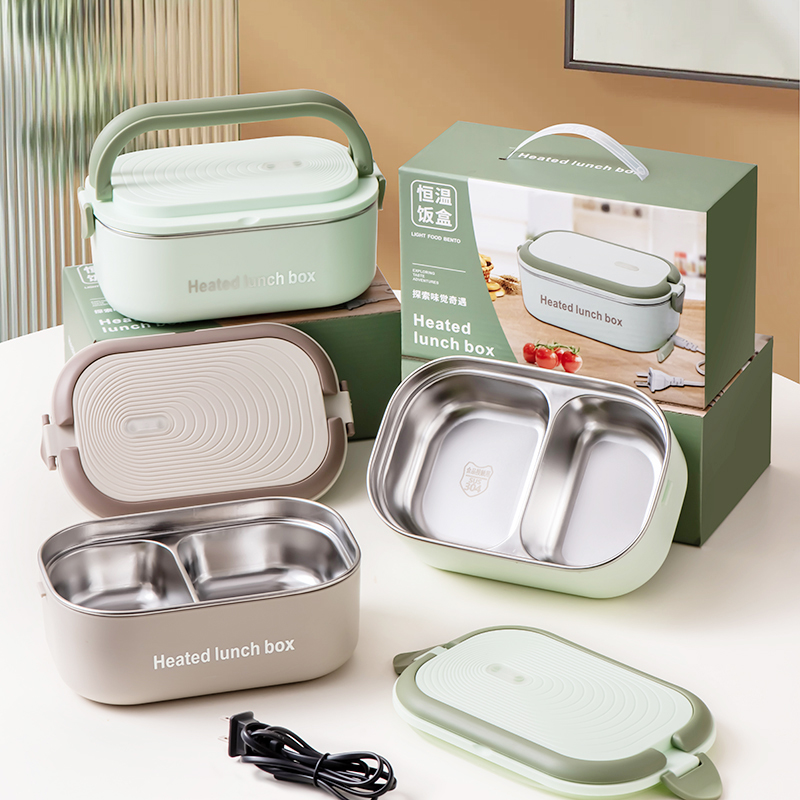
Average Heating Time for an Electric Lunch Box Food Warmer
Most electric lunch box food warmers take 20 to 60 minutes to heat a typical meal from refrigerator temperature, which is approximately 40 degrees Fahrenheit, up to a safe and palatable 165 degrees Fahrenheit or higher. The exact duration hinges on three core variables: appliance wattage, total food mass, and initial starting temperature. An 80-watt model, for example, generally requires 30 to 60 minutes to fully warm a dense 1.5-liter portion of rice and chicken, whereas lower-wattage units or smaller servings may reach target temperatures in just 20 to 40 minutes. Consumer reports and real-world user feedback consistently show that plugging in the device at the start of a standard 30-minute break yields a ready-to-eat meal by the break’s end, especially for common leftovers like pasta, soup, or stir-fry.
Food composition matters significantly as well: liquid-based meals like soup heat faster than thick stews or layered casseroles due to superior thermal conductivity. Pre-warming the container or using smaller, evenly portioned meals can shave off several minutes of warm-up time. While denser dishes may require the full hour, most users find the 30-minute average both practical and acceptable, trading a modest wait time for portability, safety, and the convenience of a hot, homemade lunch without relying on office microwaves.
Key Factors That Influence Heating Time in an Electric Lunch Box
The initial temperature and total mass of the food are the two strongest physical determinants of heating time. A meal pulled straight from the refrigerator at 40 degrees Fahrenheit demands significantly more thermal energy to reach the USDA-recommended 165-degree safety threshold than one allowed to temper at room temperature for 20 to 30 minutes. Similarly, food mass scales linearly with required thermal energy: a compact 300-gram portion of rice and vegetables typically warms in 20 to 25 minutes, whereas a 600-gram serving of heavy lasagna may need 35 to 40 minutes. This explains why identical appliance models deliver variable results in different environments—the device performs consistently, but outcomes depend entirely on how cold and heavy the loaded food is.
Wattage sets the theoretical upper limit for heating speed, but real-world performance depends just as much on insulation and overall thermal design. A well-insulated 80-watt unit will frequently outperform a poorly sealed 100-watt model. High-quality electric lunch box food warmers use double-wall stainless steel, vacuum insulation layers, and precision-fitted silicone gaskets to minimize environmental heat loss. In contrast, units with thin walls or gaps around the lid can leak 15 to 20 percent of generated heat into the surrounding air, adding 10 or more minutes to the warm-up time. Contact efficiency between the heating plate and the food tray is equally important, as flat, wide-base designs transfer energy much more uniformly than narrow or uneven surfaces.
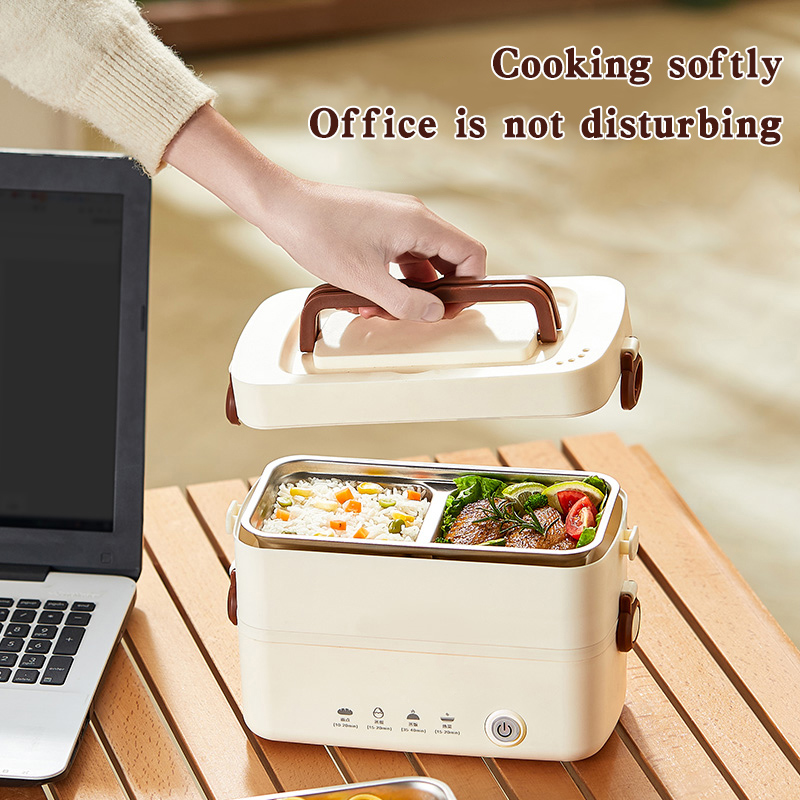
Verifying Safe and Palatable Warming Through Temperature Targets
Heating food successfully is not about superficial steam or surface warmth; it is about achieving true microbiological safety. The universal benchmark is an internal core temperature of 165 degrees Fahrenheit, which is the critical thermal threshold at which pathogens like Salmonella and E. coli are instantly destroyed. As outlined in the USDA Food Safety Guidelines, this applies to all reheated leftovers and casseroles, which are the very meals most commonly packed in portable food warmers.
Steam rising from the surface can be misleading because it confirms only superficial heating rather than ensuring the densest part of the food has escaped the bacterial danger zone between 40 and 140 degrees Fahrenheit. To verify safety properly, use the hold test: after the heating cycle ends, let the food rest for two minutes to allow internal heat to equalize, then insert a food-grade probe thermometer into the thickest section. If a thermometer is not available, liquid-based meals offer a reliable proxy, as uniform and sustained bubbling signals boiling at 212 degrees Fahrenheit. For solid foods, the best analog check remains tactile: the center should be piping hot and too hot to hold comfortably for at least five seconds.
Optimizing Performance: Tips to Reduce Heating Time
Small, intentional daily habits align your routine with the physics of efficient thermal warming, cutting down wait times without ever compromising food safety or culinary quality.
Pre-warm the container by rinsing the empty stainless steel interior with hot tap water for 60 seconds before loading your food. This simple step raises the baseline temperature and reduces thermal lag. Control your portion size and shape by dividing meals into uniform, bite-sized pieces and avoiding overfilling, keeping capacity to no more than 75 percent. Smaller, flatter layers heat much faster and more evenly than tall, compact mounds. Finally, seal the lid tightly; a fully engaged silicone gasket creates a closed thermal system that traps steam and enables gentle convection. Wipe the gasket clean before each use to ensure an airtight seal, as any gap invites heat escape and delays warming.
Frequently Asked Questions
-
How long does an electric lunch box food warmer take to heat food? It typically takes 20 to 60 minutes, depending heavily on factors such as appliance wattage, total food mass, and the initial starting temperature.
-
How can I ensure food has reached safe temperatures? Use a food-grade thermometer to check if the internal core temperature has reached 165 degrees Fahrenheit, or rely on visual cues like sustained bubbling for liquid-based meals.
-
What can I do to reduce heating time? Pre-warm your container with hot water, avoid overfilling, and divide meals into smaller, uniformly portioned pieces to maximize thermal efficiency.