
 EN
EN
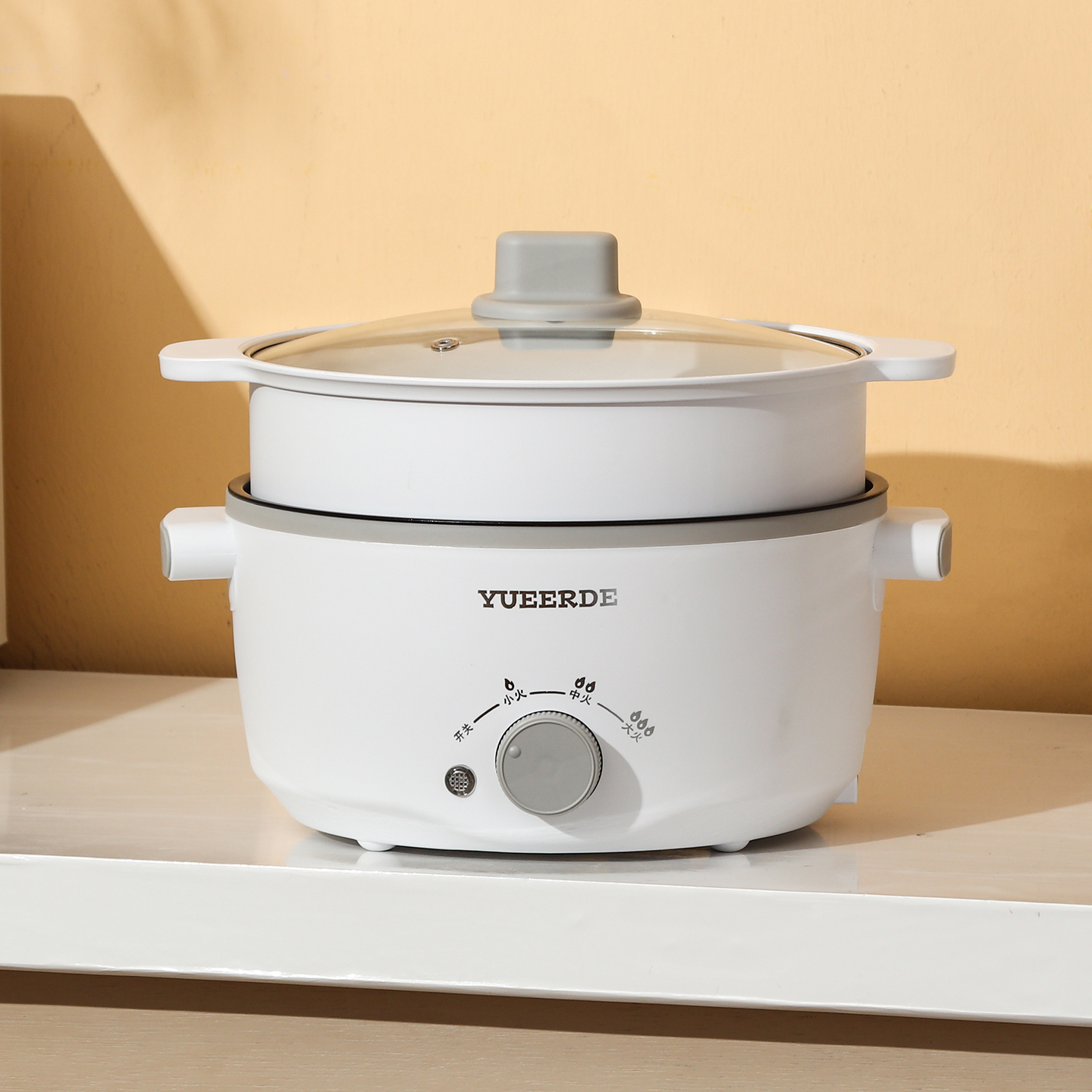
Factory-Level Customization Workflow for Commercial Electric Cooking Pots
The customization journey begins with a detailed discovery phase where B2B buyers share specific usage scenarios, daily batch volumes, and ergonomic weight targets. Factory engineers translate these operational inputs into a comprehensive technical proposal covering material grade, wall thickness variations, and bottom plate design. A detailed 3D model or computer-aided design drawing is generated for client approval before any mold cutting commences. Prototype production follows using thickness specifications precise to 0.1 millimeters to validate thermal performance and structural integrity.
Rigorous testing, including 500-hour continuous boil-dry cycles and mechanical drop tests, ensures full compliance with commercial durability standards. Once approved, full-scale production commences with real-time quality checks, including ultrasonic thickness gauging at multiple points per pot. As the global commercial kitchen equipment market approaches $112 billion, suppliers who deliver this level of engineering precision gain measurable competitive advantages.
Translating Commercial Requirements Into Precise Thickness Specifications
Turning operational needs into exact thickness specifications demands close engineering collaboration between the buyer and the factory applications team. Key inputs include the primary food type, such as watery soups versus viscous stews, daily cooking frequency, and required heat-up times. For instance, a high-volume soup kitchen may prioritize rapid thermal conduction using a 1.6-millimeter aluminum body, whereas a buffet line requiring sustained heat retention could specify a 2.5-millimeter stainless steel inner pot. Staff handling constraints also shape final decisions, as every 0.5-millimeter increase in thickness adds approximately 15 percent to total pot mass.
The factory applications team maps these variables to a specialized thickness matrix, carefully balancing thermal efficiency, structural durability, and manufacturing cost. The final technical specification sheet locks in the inner pot gauge, bottom clad thickness, and strict tolerance ranges within plus or minus 0.05 millimeters, ensuring final performance aligns precisely with the client's operational reality.
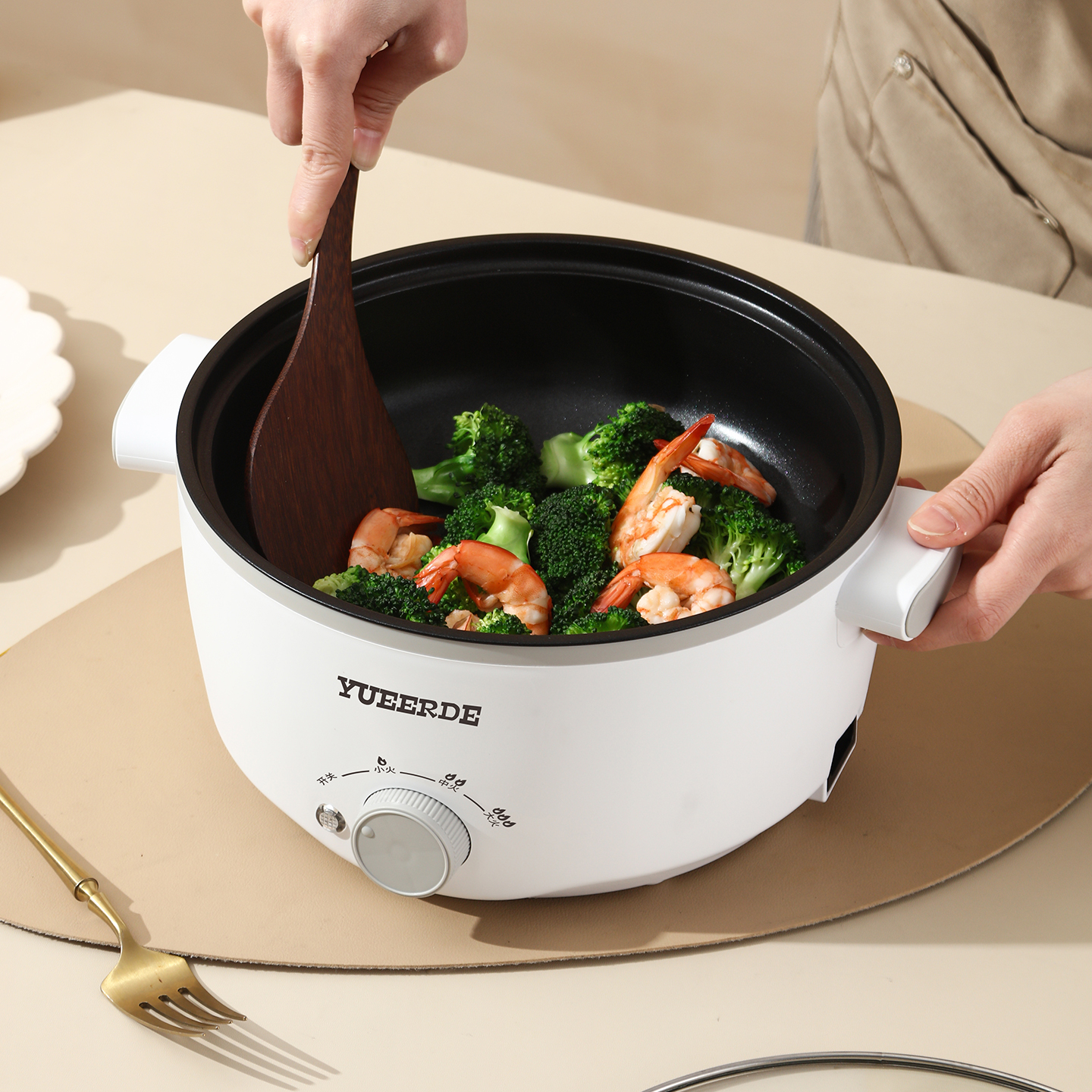
Performance Tradeoffs of Pot Body Thickness in Electric Cooking Pots
Optimal pot body thickness hinges on reconciling three interdependent factors: thermal efficiency, operational weight, and structural durability. A thicker base ranging from 2.5 to 3.5 millimeters improves heat distribution by extending the thermal path, which reduces hotspots critical for consistent batch cooking. However, this benefit clashes with ergonomics; increasing thickness from 2.0 to 3.0 millimeters in standard 304 stainless steel adds over 1.8 kilograms of mass, complicating repeated one-handed handling. Durability scales similarly, as a 3.0-millimeter body delivers 45 percent greater dent resistance than a 1.5-millimeter version, directly extending service life in demanding commercial environments.
| Thickness Range | Thermal Efficiency | Equipment Weight | Structural Durability |
| 1.5 mm – 2.0 mm | High heat-up speed, poor distribution | Very light | Low, prone to warping and dents |
| 2.5 mm – 2.8 mm | Excellent, even heat distribution | Moderate, manageable one-handed | High, suitable for 3+ years of daily use |
| 3.5 mm + | Marginal gains, slower response | Very heavy, requires two-hand lift | Excessive, practically indestructible |
Increasing pot thickness beyond 2.8 millimeters yields rapidly diminishing returns. Material costs rise non-linearly; moving from 2.8 to 4.0 millimeters in aluminum increases raw material expenditures by nearly 40 percent while delivering only a 3 percent improvement in heat spread uniformity—a difference often imperceptible in real-world kitchen conditions. Furthermore, added thermal mass raises energy consumption per cycle as heating elements work longer to saturate denser material. For ferrous materials, 2.5 to 2.8 millimeters represents the optimal balance; for aluminum, where conductivity compensates for lower mass, the engineering target is 3.0 millimeters.
Material-Specific Thickness Guidelines for Commercial Electric Cooking Pots
Material selection dictates ideal thickness ranges based on inherent thermal and mechanical properties. Aluminum’s high thermal conductivity supports thinner walls ranging from 2.0 to 2.5 millimeters while avoiding warping under repeated thermal cycling. Stainless steel, possessing lower thermal conductivity, requires 2.2 to 3.0 millimeters to prevent hot spots and maintain structural integrity in high-volume kitchens. Nitrided iron, valued for exceptional durability and non-stick performance, performs best at 2.5 to 3.0 millimeters, successfully balancing heat retention and impact resistance. A comprehensive survey of commercial kitchen equipment failures found that pots below 1.8 millimeters accounted for 68 percent of premature replacements due to dents and uneven heating.
| Material | Optimal Thickness Range | Key Benefit |
| Aluminum | 2.0 – 2.5 mm | Fast, even heat distribution |
| Stainless Steel | 2.2 – 3.0 mm | Resistance to corrosion and warping |
| Nitrided Iron | 2.5 – 3.0 mm | Superior heat retention and impact strength |
Inner pot thickness critically affects cooking consistency and appliance lifespan. Uniform wall thickness minimizes temperature gradients, reducing the risk of food scorching. In multi-layer designs, the core conductive layer should be at least 1.5 millimeters thick to ensure efficient heat transfer, while outer protective layers may be slightly thinner. Industry data demonstrates that pots with bases of 2.5 millimeters or greater last 40 percent longer in continuous commercial use. Edge-to-edge consistency is equally vital, as variations exceeding 0.2 millimeters introduce stress concentrations at the base-wall joint, often triggering fractures after approximately 1,000 cooking cycles. This precision is achieved through advanced CNC spinning or deep-drawing processes, holding manufacturing tolerances within plus or minus 0.1 millimeters.
Frequently Asked Questions
-
Why is pot thickness customization important for electric cooking pots?
Proper thickness ensures optimal performance by balancing thermal efficiency, operational weight, and structural durability. Customization adapts the pot to specific commercial cooking needs, improving longevity and energy efficiency.
-
What thickness is ideal for stainless steel cooking pots?
Stainless steel pots generally require a thickness between 2.2 and 3.0 millimeters to prevent warping, ensure even heating, and withstand high-volume commercial usage.
-
How does increased pot thickness affect energy consumption?
Thicker pots require more energy to heat because the thermal mass increases. Beyond specific engineering thresholds, the rise in energy consumption outweighs any performance benefits.
-
What is the importance of uniform wall thickness?
Uniform thickness minimizes temperature gradients, reduces food scorching, and prevents premature failures like base-wall joint fractures, significantly increasing the pot's operational lifespan.
-
Can aluminum pots handle high-temperature cooking?
Yes, aluminum pots with a 2.0 to 2.5-millimeter thickness offer excellent heat conductivity and perform well under repeated thermal cycles without warping, making them suitable for demanding cooking applications.