
 EN
EN
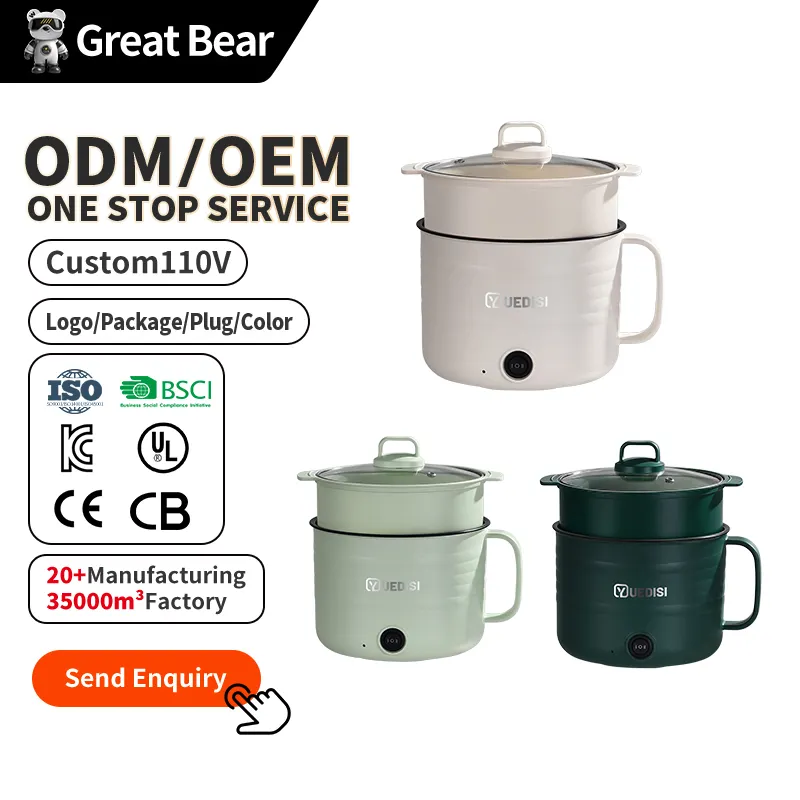
Thermal Conductivity Of Hot Pots: What Is It and Why Does It Matter?
What does efficiency and energy transfer mean in electric hot pots?
This is the measure of the speed of heat (in W/m·K) that explains the construction and design of electric hot pots. It basically shows us how fast heat moves through a material from a source to an outer surface. When it comes to electric hot pots, the thermal conductivity of the material influences the efficiency of energy use, speed of heat, and the responsiveness of the pots to temperature changes. Improved thermal conductivity means a heating element will heat water faster. Aluminum hot pots (thermal conductivity of approx. 237 W/m·K) heat faster and offer better control to the user in comparison to pots made from other materials that have lower thermal conductivity. That means shorter wait times for the pot to preheat, no hot spots, and you save an average of 15 percent on energy costs every time you boil water.
Aluminum (237 W/m·K) vs. stainless steel (16–24 W/m·K): Connecting the numbers to real plastic pot behavior
The 10+ conductivity difference between the two materials results in significant real-world differences. The atomic structure of aluminum allows for nearly instantaneous shifting of heat, which results in
-70% faster cold-start heat-up (i.e. room temperature to boil)
-3 times greater responsiveness to temperature changes
-Up to 40% less energy wasted in sustained heating phases
The way stainless steel reacts to heat is much slower than any other material, which means it takes much longer to heat and creates hot spots in the cooking area. With this, constant stirring can end up becoming a necessity, and things are nearly guaranteed to burn. However, smart kitchenware manufacturers create a middle ground to this problem. They create clad cookware, which is stainless steel on the outside and aluminum on the inside. The aluminum conducts heat much better, and stainless steel provides the other benefits such as anti-corrosiveness and safety in food contact. This combination is great for cooking food that is tomato-based, or soups, and it is better than using stainless steel.
Heat Conduction In Electric Hot Pots in Real Life Applications
The time it takes to boil: it has been shown that aluminum inner pots boil water 30 to 40% quicker than stainless steel over the sam erotating hot pot electric hot pot conditions
one aluminum pot tested in a lab was able to boil 1 liter of water in 6 minutes and 12 seconds. This is around a 38% improvement in time as opposed to stainless steel that takes around 8 minutes and 50 seconds. In other words, aluminum pots boil water fater than any other material. If we measured the time it took to boil cold water, the amount of time would only make the winner more of a winner. This would mean that before people are able to start cooking, they actually would have to wait to start cooking, make more people to stand around and make a meal and save electric costs during the meal. Activities like this would make life easier. In family dinners and busy office kitchens this is very helpful.
Uniformity of temperature: Infrared evidence indicates aluminum features <8 degrees Celsius surface variance as opposed to 22 to 35 degrees Celsius variance in stainless steel.
The use of infrared thermal imaging reveals some stark contrasts in heat distribution. Aluminum cookware, for example, maintains temperature differentials of less than 7.4 degrees Celsius across its entire surface, while the steel counterparts show large regions of hot and cold. Aluminum will help ensure that tender foods such as tofu or seafood will not be burnt, as the steel will create hot zones of 125 degrees plus and cold zones of 90 degrees or less within one cooking region. From our analysis, aluminum cookware will also allow chefs to stir their food less frequently, sometimes as much as 50% to 60% less than will be required with other materials used in cook pots. Overall, our analysis indicates that aluminum cookware has the least number of cold spots during the food preparation process and the least temperature differential cold spots while food is being cooked.
Performance Metric Aluminum Inner Pot Stainless Steel Inner Pot
Average Surface Variance <8°C 22–35°C
Simmer Stability ±3.2°C fluctuation ±9.1°C fluctuation
Cold-Spot Incidence 0.3 instances per meal 2.1 instances per meal
Beyond Conductivity: Critical Trade-Offs for Electric Hot Pot Inner Pots
Durability, corrosion resistance, and food safety: Why stainless steel persists despite lower conductivity
Stainless steel is preferable for use in cookware as it withstands many problems encountered in cookware use, such as corrosion. It is also less reactive with foods, in particular, acidic foods like kimchi, tomatoes, and vinegar that many people enjoy as sauces or soups. In addition, food does not acquire a metallic taste as the stainless steel surfaces do not leach metallic ions. The use of stainless steel pans and pots is also a more safe means of preserving the flavor of foods. The cookware pieces are also able to withstand scrubbing, and repeated heating will not cause warping, scratching, or deterioration of the cookware. Although stainless steel does not transfer heat as rapidly as some cookware materials, it is this characteristic that makes it the first choice of many professional and home chefs.
Reactivity Issues With Aluminum and How Anodized and Clad Designs Solve Them in Today's Electric Hot Pots
In its uncoated state, aluminum has the ability to chemically react with either alkaline or acidic food and this raises the question of safety, as well as potentially altering the taste of food. Today's premium electric hot pots eliminate this risk with two proven engineering methods.
Anodization: This electrochemical process thickens the natural oxide layer of aluminum into a dense, non-porous and scratch resistant synthetic sapphire like layer that is fully inert when cooking.
Clad: This is a method of creating a metallurgical bond with aluminum that is sandwiched between two layers of stainless steel, and so stainless steel is inert to food, but aluminum can serve as the internal conduit for the transfer of thermal energy throughout the food.
Both methods address durability, safety and thermal conductivity, including the inductively heated bases.
Smart Material Solutions: What the Latest Electric Hot Pots Show Us About the Best Possible Inner Pot Construction
Modern quality electric hot pots have mastered the balance of providing fast heating and safe cooking. Most manufacturers have adopted a design that uses a variety of metals working in a sandwich construction. Ensuring even heating in the hot pot is the aluminum core. Aluminum has a thermal conductivity of about 237 W/mK. Testing shows that the surface area temperature difference is less than 8 degrees Celsius throughout the pot. Wrapped around the aluminum core is food grade stainless steel, which has thermal conductivity of about 16-24 W/mK. Aluminum doesn’t rust, and food doesn’t react with stainless steel, so cooking is safe with this metal. Compared to standard stainless steel pots, boiling times are improved by about 30 to 40 percent, and even with these improvements they are still induction stove compatible and dishwasher safe. Plus, some pots have anodized aluminum surfaces, which improves the pot’s heat transfer properties and is more durable than standard aluminum coatings.
What makes a good inner pot? Three factors are important: how good it is at distributing heat, whether it can break down chemically when cooking acidic foods, and how long it can last before showing sign of wear and tear. Double-layer construction is more efficient compared to pots made of single-layer materials.
FAQ Section.
What is thermal conductivity and why is it important for electric hot pots?
Electric hot pots require materials that have high thermal conductivity. This is important for quick heating, even temperature distribution, and overall efficient energy usage.
Why are aluminum inner pots preferred over stainless steel?
Stainless steel has a significantly lower thermal conductivity than aluminum, resulting in a slower heating time, more energy waste, and more uneven temperature distribution.
How do manufacturers address aluminum's reactivity?
Manufacturers use anodization or cladding techniques to treat aluminum, providing a safe, durable, and inert cooking surface while retaining aluminum's heat conduction.
What is the advantage of clad cookware?
Clad cookware is built with aluminum's thermal conductivity and stainless steel's durability and safety, combining the best cooking performance and food safety.
Can you use electric hot pots with aluminum inner pots on induction?
Yes, most new models of hot pots have an aluminum inner pot and an induction-ready base which makes them suitable for use with induction cooktops.
For inquiries, please contact:
Leah Lin
Wechat/Whatsapp:+86 18098121508
Email:[email protected]
Theta
+86 18029859881
[email protected]
PS:Fill in the form and leave your phone number, or contact our salesperson directly