 EN
EN
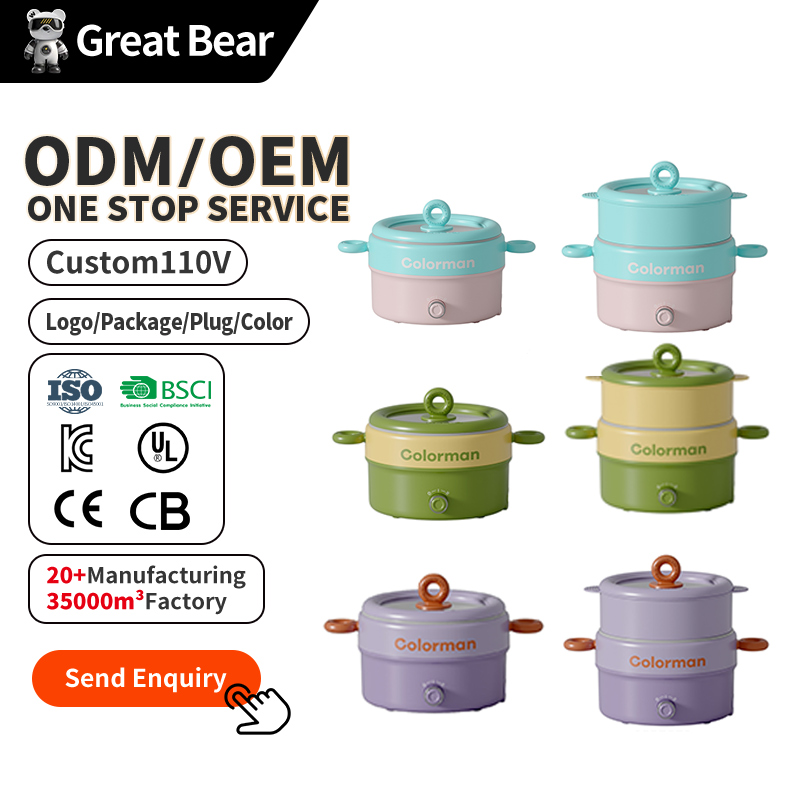
Travel Readiness: Size, Weight, and Power Compatibility of Portable Mini Electric Non-Stick Hot Pots
Easy to Pack Standards: <2.5 lbs, < 6 inches across, and collapsible handle design
When considering practicality, its about the packing volume and the empty weight of the item. The best rated portable mini electric non stick hot pots weight about 2.5 lbs, less than many laptops, and have a packing volume smaller than 6 inches across so they fit well into suitcases. Most have definable and folding handles so they don’t get snagged during packing and some handle designs even allow the pot to lose about 2/3 of its volume from the design. They all fit standard airline carry-on requirements and don’t impact the cooking volume of the pots.
Most serious backpackers aim for anything under 1.5 pounds as they know that weight will be very important for long distanced hikes, though those who camp from their car may be fine with a heavier pack as long as it has a larger food capacity and can be stably mounted on picnic tables or counters.
For easy portability, universal battery and voltage options (110V–240V) are available for international use.
Versatile power options make international travel a lot easier. Dual voltage devices can be used in most countries without a bulky or unsafe plug adapter. Battery-powered versions allow for even more freedom, especially on trains, when camping, or during airport layovers. Most modern lithium-ion batteries will last through 2-3 cooking sessions before needing a recharge, and some even come with a solar panel option for extended trips. Based on guidelines set by the IEC for portable devices, universal devices designed for international use are 90% less likely to encounter power-related issues when compared to their single voltage counterparts.
Power Type Best For Weight Impact
Universal Voltage Hotels, hostels Minimal
Rechargeable Battery Trains, campsites, flights +20% avg.
Solar-Ready Backcountry adventures +15% avg.
While battery and solar options increase weight, they decrease reliance on outlets, especially when charging access is uncertain.
Control Interface Showdown: Mechanical Knob Reliability vs Smart Panel Transit Functionality
Mechanical Knobs have No Firmware Reliance, Intuitive Ease, and Proven Longevity
Travelers understand that mechanical knobs work, especially when the situation is more demanding. They don’t have to worry about a firmware malfunction, missed updates, or downtimes due to lost Wi-Fi. Such simple mechanical controls function well in the absence of service when traveling off the grid, and they often make the difference in comfort levels during long journeys. The physical dial system allows and boosts the user to make instant adjustments to the temperature without navigating through a digital interface, which is crucial to them especially in situations that require quick and confident adjustments due to the occurrence of abrupt shaking in the the aircraft or during the transport of freight, or when long lines are formed. Their overhaul reinforcements either through metals or premium polymers, makes them endure the most extreme conditions in a journey. Their reliability from a mechanical perspective has been tested through a user- program that has them subjected to falls from three feet on an unyielding concrete layer and continued to function optimally.
Digital Panels with Smart Technology Present Convenience with Practical Issues
Smart technology in digital panels provides convenience, but practical issues arise with their use by individuals with an active lifestyle. Cooking presets such as `soup and stir fry`, make meal preparation easy. However, these features will consume battery life faster, with smart panels draining 40 percent more battery life than old-style mechanical panels. In fact, the memory feature will need constant power, which can be an issue with low battery availability, and fluctuating battery charge cycles. In addition, touch panels have freezing issues which make them essentially useless for winter camping and mountain excursions. Closed systems are designed to limit touch panel electronics. Safety tests for the UL 1026 benchmarking have shown that these touch panel electronics are points of failure during emergencies. For active travelers, basic panel technology is preferred to avoid being stranded with smart panel technology that will not provide reliable operation.
Longevity of Non-Stick Coatings Under Actual Travel Conditions
Ceramic vs PTFE: Scratch resistance after repeated cleaning of hotel sinks and utensil use
Traveling, and particularly shared accommodation, means that our belongings may get a rough time. Private and shared kitchen facilities will be used for cleaning and may use rough cleaning utensils. In rough hotel cleaning situations, ceramic surfaces have a clear advantage over PTFE surfaces. As ceramic surfaces are made from inorganic minerals, they are less likely to break down through rough sponge cleaning, and metal utensil bumps. Ceramics will remain non stick surfaces even after being sink cleaned 50 times. Studies show that PTFE will start to show micro scratches after 20 sink cleans when used as cookware. For long trips, ceramic non stick cookware is an absolute must. In shared facilities you have no control over the actions of others.
Aircraft engineering novel material for shock resistance. Direct heating from cold surfaces and sustained coating wear.
Rapid heating situations occur incredibly often when traveling. Consider the situation when a cold travel pot is pulled from a snowy campsite or a cold pot is taken from a hostel kitchen. In such an instance, it is far better to use a pot with a ceramic coating. The reason is that in this case, the coating will be more likely to remain in place. This happens because ceramic coatings have properties that in laboratory situations, that demonstrate adherence to a ceramic coating after numerous exposure to rapid freezing and boiling cycles. In situations that involve exposure to rapid temperature changes, adhesion fails and delaminates from the surface. For this reason, a pot with a PTFE coating is not the best choice for use in mountain cabins in winter or other unpredictable places.

Decision Framework: Your Travel Profile Matched with a Mini Electric Hot Pot
Suitable portable mini electric non-stick hot pots for your needs depend more on your travel style than features on the pots. Mechanics with ceramic coatings and worldwide voltage adaptability are best for remote inaccessible places. These kinds last a long time in the real world on real adventures because they are designed for anything and everything. The old style knobs don’t care about moisture or impacts like are common in remote places. These types are designed for adventures with no WiFi, sparse wall plugs, or poor storage.
On the other hand, your travel style, if you are a business traveller or a digital nomad with serviced apartments and co-working spaces, uses some of the convenience provided by programmable control panel features like meal prep timers and recipe presets which are useful for remote work.
These evidence-based alignments is relevant here.
Sub 2.5 lbs, universal voltage 110V-240V, mechanical controls, ceramic coatings adventure travelers. This is backed by IEC, UL, ASTM.
Urban explorers appreciate the folding handle and built-in battery options for spur-of-the-moment park picnics, café lunches, or shared kitchen use.
Extended-stay trippers, especially those in well-equipped rentals, may value PTFE’s initial slickness and ease of cleaning (as long as they don't induce thermal shock or abrasive scrub).
Ultimately, prioritise mechanical durability if your travels include hostels, voltage variability, or rough handling during transport. Smart functionality is only worth it when the infrastructure is ready to support it—and always keep practical performance for transport in mind, more than the spec list.
FAQ Section
What is the weight consideration for traveling with portable mini electric hot pots?
Portable mini electric hot pots weigh roughly 2.5 lbs or less to ensure they are lightweight to facilitate easy transport as well as comply with airline carry-on regulations.
Are there portable hot pots that can work on different power voltages around the world?
Yes, there are portable hot pots that work on universal voltage (110V–240V) which means they don’t need a voltage converter to work.
What type of control interface is more reliable for travelers?
Mechanical knobs are considered more reliable for travelers, as they don’t rely on firmware or a continuous power supply, making them more suitable for varied and inconsistent travel conditions.
How do ceramic coatings compare with PTFE when it comes to durability?
Ceramic coatings are a better option for rigorous travel use, as they are more scratch resistant and better withstand thermal shocks compared to PTFE.
For inquiries, please contact:
Leah Lin
Wechat/Whatsapp:+86 18098121508
Email:[email protected]
Theta
+86 18029859881
[email protected]
PS:Fill in the form and leave your phone number, or contact our salesperson directly